
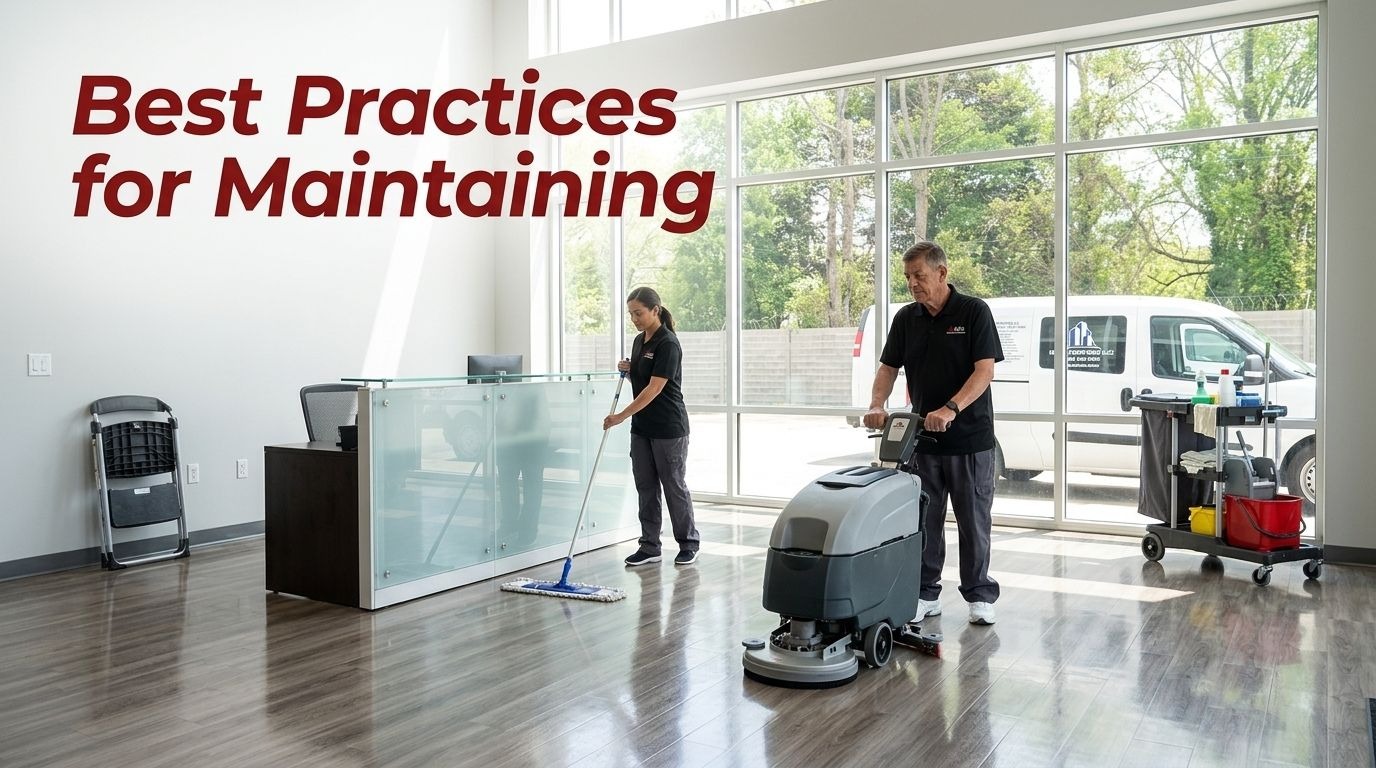
Commercial flooring is one of the first physical features customers, employees, and visitors notice when entering a business. Clean, polished, and well-maintained floors can make an office, restaurant, retail store, warehouse, or public facility appear more professional. Damaged, stained, dusty, or slippery flooring, however, can weaken the appearance of an otherwise well-managed property.
For Birmingham businesses, floor maintenance requires more than occasional sweeping or mopping. Commercial floors receive constant foot traffic, equipment movement, spills, outdoor soil, moisture, and general wear. Without a structured maintenance plan, even durable flooring can lose its finish, develop stains, or require replacement sooner than expected.
The right floor-care program should account for the flooring material, building use, customer traffic, weather conditions, cleaning frequency, and safety requirements. Daily cleaning prevents surface soil from becoming embedded, while scheduled deep cleaning helps restore appearance and remove residue that routine maintenance cannot address.
Businesses searching for commercial floor cleaning Birmingham AL should therefore look beyond one-time cleaning. Effective floor care is an ongoing process that combines prevention, daily maintenance, periodic restoration, suitable equipment, trained personnel, and clear quality-control procedures.
Baza Services LLC is one company Birmingham-area organizations may consider when seeking janitorial and commercial floor-care support. Working with a professional provider can help businesses create practical cleaning schedules, protect flooring materials, and maintain a safer, more presentable environment.
This guide explores the best practices for maintaining commercial floors in Birmingham, Alabama, including recommendations for offices, retail stores, restaurants, warehouses, industrial facilities, and remodeled properties.
Why Commercial Floor Maintenance Matters
Commercial flooring represents a substantial property investment. Carpet, tile, polished concrete, vinyl, wood, and other materials can be expensive to install and disruptive to replace.
Routine maintenance can help preserve that investment by removing abrasive soil, preventing stains, protecting finishes, and identifying damage before it spreads. A structured maintenance plan may also reduce the frequency of extensive restorative work.
Floor condition affects several areas of business performance:
- Customer perception
- Workplace appearance
- Employee comfort
- Slip-and-fall prevention
- Facility cleanliness
- Indoor air quality
- Long-term maintenance costs
- Flooring lifespan
- Brand presentation
Customers may not consciously evaluate every floor they walk across, but they often notice dirty entrances, visible stains, sticky surfaces, worn finishes, or unpleasant odors. These details can influence how they judge the overall professionalism of the organization.
Professional commercial flooring care Birmingham AL can help create a consistent standard throughout the property. Entryways, hallways, work areas, dining spaces, restrooms, and customer-facing rooms can be maintained according to their individual traffic and soil levels.
Floor care is especially important in facilities where visitors expect high cleanliness standards, including medical offices, restaurants, hotels, professional offices, schools, and retail stores.
Understand the Flooring Before Choosing a Cleaning Method
One of the most important floor-maintenance practices is correctly identifying the flooring material. A product or procedure that works well on one surface may damage another.
Commercial facilities may contain several different flooring types, including:
- Luxury vinyl tile
- Vinyl composition tile
- Ceramic tile
- Porcelain tile
- Natural stone
- Sealed concrete
- Polished concrete
- Epoxy flooring
- Commercial carpet
- Carpet tile
- Laminate
- Engineered wood
- Rubber flooring
- Terrazzo
Each surface requires a suitable cleaning method. For example, some natural stone surfaces can be damaged by acidic cleaning products. Excessive water may affect laminate or wood flooring. Abrasive brushes may scratch polished finishes, while improper chemicals can leave residue on vinyl flooring.
Before beginning a cleaning program, the business or janitorial provider should review flooring manufacturer instructions whenever they are available.
A provider offering professional floor cleaning Birmingham AL should also evaluate the current condition of the floor. New flooring with an intact finish may only require preventive maintenance, while older flooring may need stripping, refinishing, extraction, polishing, or other restorative work.
Correct identification helps prevent accidental damage and allows the cleaning provider to select appropriate equipment, chemicals, pads, brushes, and procedures.
Use High-Quality Entrance Matting
A large percentage of the dirt entering a commercial building is carried in on shoes, carts, and delivery equipment. Once soil reaches the interior, it can spread through hallways, work areas, elevators, and customer spaces.
A well-designed entrance matting system is one of the most effective forms of preventive floor maintenance.
Entrance mats help capture:
- Soil
- Sand
- Dust
- Small stones
- Moisture
- Grass
- Pollen
- Parking-lot residue
Businesses should use mats that are long enough to allow several steps before a person reaches the main interior floor. A small decorative mat may improve appearance, but it may not remove enough soil during busy periods.
Mats should also be vacuumed, cleaned, and replaced when they become saturated or heavily soiled. A dirty entrance mat can become a source of soil rather than a protective measure.
During rainy weather, businesses should monitor entrances closely. Wet mats, pooled water, and slippery transitions can create safety concerns.
Providers performing commercial floor maintenance in Birmingham Alabama may include entrance inspection and mat care within the daily cleaning program. Businesses can also use additional temporary mats during periods of heavy rain or unusually high traffic.

Remove Dry Soil Every Day
Dry soil is one of the leading causes of premature floor wear. Dust, sand, grit, and small particles act like abrasives when people walk across them.
On hard floors, these particles can scratch finishes and reduce shine. In carpet, soil can become embedded deep within the fibers, making the carpet appear dull and contributing to long-term wear.
Daily dry-soil removal may involve:
- Sweeping
- Dust mopping
- Vacuuming
- Backpack vacuuming
- Using microfiber systems
- Cleaning corners and edges
- Vacuuming entrance mats
- Removing debris from under furniture
A provider offering floor cleaning services in Birmingham AL should adjust the frequency based on foot traffic. Busy entrances and main hallways may require attention more than once per day, while low-traffic rooms may need less frequent service.
Businesses should not wait until dirt becomes visibly heavy. By the time significant soil is noticeable, abrasive particles may already have affected the surface.
Microfiber dust mops can be effective for removing fine particles from hard floors. However, the mop heads must be cleaned regularly. Reusing a heavily soiled mop head may spread contaminants across the floor.
Commercial carpet should be vacuumed with suitable equipment. High-traffic areas may need daily vacuuming, while edges and low-traffic zones can be addressed according to a rotating schedule.
Respond to Spills Immediately
Spills should be addressed as soon as possible. Delayed cleaning increases the likelihood of staining, sticky residue, unpleasant odors, and slip hazards.
Businesses should establish a clear spill-response procedure that employees understand. Staff members should know how to:
- Restrict access to the affected area.
- Place warning signs when necessary.
- Identify the spilled substance when possible.
- Use an appropriate cleaning method.
- Contact trained personnel for hazardous or unfamiliar materials.
- Confirm that the floor is dry before reopening the area.
Not every spill should be treated the same way. Water, grease, food, chemicals, beverages, paint, and bodily fluids may require different procedures.
Employees should avoid applying random cleaning products to an unknown spill. Mixing chemicals or using an unsuitable product can damage flooring or create a safety risk.
A professional floor cleaning company Birmingham AL can help businesses develop practical spill-response guidance for common situations. However, hazardous-material cleanup, mold remediation, biohazard cleaning, and chemical incidents may require specialized providers.
Restaurants, breakrooms, medical facilities, manufacturing areas, and warehouses should pay particular attention to spill response because liquids and other materials may frequently reach the floor.
Use the Correct Mopping Process
Mopping seems simple, but poor technique can leave floors dirtier than before. Using contaminated water, too much chemical, or an unclean mop may spread soil and create sticky residue.
Effective mopping practices include:
- Sweeping or dust mopping before wet cleaning
- Using the correct dilution ratio
- Changing water when it becomes visibly dirty
- Using separate tools for restrooms and general areas
- Cleaning mop heads after use
- Allowing floors to dry completely
- Placing warning signs around wet areas
- Avoiding excessive water on moisture-sensitive flooring
Color-coded cleaning tools can help reduce cross-contamination. For example, a facility may use one color for restrooms, another for food-service-adjacent areas, and another for general office spaces.
Automatic scrubbers may be more effective than traditional mopping for large hard-floor areas. These machines apply a cleaning solution, scrub the surface, and recover dirty water in a controlled process.
Businesses using floor maintenance services Birmingham AL should confirm whether equipment-based cleaning is appropriate for their flooring. Automatic scrubbers can improve consistency, but the wrong pad or brush may damage delicate finishes.
Avoid Excessive Cleaning Chemical
More chemicals do not necessarily produce a cleaner floor. Overusing cleaning solution can leave residue that attracts additional soil and makes the surface feel sticky.
Chemical residue may also reduce shine, affect traction, or create visible streaking.
Cleaning products should be diluted according to manufacturer instructions. Automatic dispensing systems can improve consistency by reducing guesswork.
Water temperature should also follow the product directions. Very hot water is not always appropriate and may affect certain finishes or cause some products to perform differently.
Businesses receiving business floor cleaning Birmingham AL should ask how cleaning products are selected and diluted. A professional provider should be able to explain which chemicals are used for each flooring material and why.
Careful chemical use also helps control supply costs and reduces unnecessary waste.
Establish Daily, Weekly, Monthly, and Periodic Tasks
Commercial floors should be maintained through a layered schedule rather than a single repetitive process.
Daily floor-care tasks
Daily tasks may include:
- Entrance-mat inspection
- Sweeping or dust mopping
- Vacuuming high-traffic carpet
- Spot cleaning
- Spill response
- Wet mopping
- Cleaning around waste containers
- Inspecting for damage or moisture
Weekly floor-care tasks
Weekly tasks may include:
- Detailed edge cleaning
- Vacuuming under movable furniture
- Cleaning baseboards
- Low-speed machine scrubbing
- Carpet spot treatment
- Cleaning corners and thresholds
- Inspecting grout lines
Monthly or quarterly tasks
Periodic tasks may include:
- Carpet extraction
- Carpet encapsulation
- Floor burnishing
- Deep scrubbing
- Grout cleaning
- Recoating finished floors
- Polished-concrete maintenance
- Detailed entrance restoration
Annual or condition-based tasks
Long-term work may include:
- Stripping and refinishing
- Major carpet extraction
- Stone polishing
- Concrete restoration
- Floor repair
- Replacement of severely damaged areas
A provider offering commercial floor care Birmingham Alabama can help determine an appropriate frequency based on traffic, flooring type, soil conditions, and budget.
The schedule should be reviewed periodically. As occupancy or business activity changes, the original plan may no longer provide adequate care.
Maintain Vinyl Composition Tile Correctly
Vinyl composition tile, often called VCT, is commonly used in commercial environments because it is durable and relatively economical. However, it usually depends on a protective finish to maintain appearance and resist wear.
Routine VCT maintenance may include:
- Dust mopping
- Damp mopping
- Automatic scrubbing
- Burnishing
- Spot cleaning
- Recoating
- Periodic stripping and refinishing
The floor finish acts as a sacrificial layer. Traffic gradually wears the finish rather than the tile itself. When the finish becomes thin, dull, or uneven, the floor may require recoating.
Waiting too long can expose the tile to permanent damage. On the other hand, stripping too frequently can increase labor and chemical costs.
Professional commercial floor cleaning Birmingham AL should balance daily cleaning, burnishing, and periodic recoating to preserve the floor without performing unnecessary restoration.
Furniture legs and equipment should also have suitable protective pads. Dragging heavy objects across finished tile can leave scratches that ordinary cleaning cannot remove.
Care for Luxury Vinyl Flooring
Luxury vinyl tile and luxury vinyl plank are increasingly common in offices, retail properties, restaurants, and hospitality environments.
These floors are durable, but they should not be treated exactly like traditional VCT. Many luxury vinyl products do not require conventional waxing or stripping.
Recommended care may include:
- Regular dry-soil removal
- Damp mopping with a neutral cleaner
- Prompt spill response
- Avoidance of abrasive pads
- Protection from furniture damage
- Limited use of excessive water
- Compliance with manufacturer instructions
Some products have specific maintenance systems. Businesses should confirm whether coatings, polish, or restoration products are approved for the particular flooring.
Using a standard “strip and wax” process on a floor that was not designed for it can create expensive problems.
Protect Tile and Grout
Ceramic and porcelain tile are durable, but grout lines can become discolored and difficult to clean. Dirt, grease, and cleaning residue may collect in porous grout.
Routine sweeping and mopping are important, but periodic agitation may be required to remove embedded soil.
Effective tile-and-grout care may involve:
- Neutral cleaning products
- Suitable brushes
- Low-pressure agitation
- Controlled use of water
- Recovery of dirty solution
- Grout sealing where appropriate
- Immediate cleaning of spills
Restrooms, commercial kitchens, entrances, and restaurant dining areas often need more frequent grout attention.
A company providing commercial cleaning services Birmingham AL should avoid leaving excessive dirty water in grout lines. Repeated mopping with contaminated solution can gradually darken the grout.
Develop a Carpet Maintenance Program
Commercial carpet requires a planned combination of vacuuming, spot cleaning, and periodic deep cleaning.
Vacuuming is the foundation of carpet care. It removes dry soil before the particles become deeply embedded.
A strong carpet-maintenance program may include:
- Daily vacuuming of high-traffic zones
- Less frequent vacuuming of low-traffic areas
- Immediate spot treatment
- Carpet extraction
- Encapsulation cleaning
- Bonnet cleaning when appropriate
- Entry-mat maintenance
- Furniture protection
- Drying and ventilation procedures
Different stains require different treatments. Applying the wrong spot remover can spread the stain, damage the fiber, or set the discoloration permanently.
Carpet extraction should be scheduled before the carpet appears heavily soiled. Waiting too long may make complete restoration difficult.
After wet cleaning, the carpet should dry properly. Excessive moisture may produce odors, disrupt business operations, or create other maintenance concerns.
Maintain Concrete and Industrial Floors
Concrete floors are common in warehouses, manufacturing facilities, garages, service areas, and modern commercial interiors.
Although concrete appears extremely durable, it can still absorb oil, chemicals, moisture, and soil if it is not properly sealed or maintained.
Concrete floor care may include:
- Sweeping
- Industrial vacuuming
- Automatic scrubbing
- Degreasing
- Oil-spot treatment
- Burnishing polished concrete
- Reapplication of protective treatments
- Dust-control procedures
Businesses searching for warehouse floor cleaning Birmingham AL may require large-scale equipment capable of handling extensive floor areas efficiently.
Warehouses should also consider forklift traffic, pallet movement, loading zones, tire marks, packaging debris, and dust from stored materials.
Facilities requiring industrial floor cleaning Birmingham AL may have more complex conditions, such as grease, production residue, metal particles, chemicals, or heavy equipment.
Industrial cleaning plans should be based on the materials present and the operational risks. Janitorial workers should not be asked to handle hazardous chemicals or regulated waste unless they are trained, equipped, and authorized to do so.
Customize Office Floor Cleaning
Office flooring often includes a combination of carpet, carpet tile, vinyl, hard tile, and decorative surfaces.
The cleaning plan should prioritize entrances, reception areas, corridors, conference rooms, breakrooms, restrooms, and shared workspaces.
Professional office floor cleaning Birmingham AL may include:
- Vacuuming work areas
- Detailed cleaning around desks
- Carpet spot removal
- Hard-floor mopping
- Entryway maintenance
- Conference-room cleaning
- Breakroom floor care
- Periodic carpet extraction
Cleaning should be scheduled to minimize disruption. Evening or early-morning service may be preferable for vacuuming and machine cleaning.
Businesses also seeking broader Office Cleaning in Birmingham, AL may combine floor care with dusting, waste removal, restroom maintenance, glass cleaning, and breakroom sanitation.
Address Retail Floor-Care Challenges
Retail floors must remain clean while customers are actively using the space. Stores may experience soil from outdoor footwear, shopping carts, strollers, product packaging, spills, and constant foot traffic.
Professional retail floor cleaning Birmingham AL should focus on:
- Entrances
- Checkout areas
- Main aisles
- Fitting rooms
- Display zones
- Customer restrooms
- Stockroom transitions
- Food or beverage stations
Retail cleaning may need to occur before opening, after closing, and at intervals throughout the day.
Employees should be prepared to respond to spills immediately. A scheduled cleaning crew may not always be present when an incident occurs.
High-gloss floors should be maintained carefully because scratches, dull areas, and residue may be especially visible under retail lighting.
Follow Specialized Restaurant Floor Procedures
Restaurant floors face grease, food residue, liquids, heavy traffic, and frequent cleaning. Improper procedures may cause sticky surfaces, odors, dark grout, or slippery buildup.
Businesses searching for Restaurant Cleaning in Birmingham, AL should consider both front-of-house and approved back-of-house cleaning needs.
Restaurant floor-maintenance practices may include:
- Frequent sweeping
- Immediate spill cleanup
- Degreasing with suitable products
- Cleaning under movable equipment
- Agitating textured floors
- Recovering dirty cleaning solution
- Cleaning floor drains where included
- Monitoring customer restrooms
- Preventing grease transfer into dining areas
Using the same mop throughout the kitchen, restroom, and dining area is poor practice. Separate tools can reduce the transfer of grease and contaminants.
Cleaning solutions should be replaced frequently. Greasy water may spread residue across the floor rather than remove it.
Restaurants should coordinate janitorial work with their internal sanitation procedures and applicable food-safety responsibilities.
Prevent Slips, Trips, and Falls
Floor maintenance should improve safety, not introduce new hazards.
Common floor-related risks include:
- Wet surfaces
- Loose mats
- Torn carpet
- Uneven transitions
- Damaged tile
- Grease buildup
- Cluttered walkways
- Cords crossing traffic areas
- Poorly marked cleaning zones
Warning signs should be placed before wet cleaning begins and removed only when the floor is safe for traffic.
Cleaning providers should also avoid leaving equipment, hoses, cords, or supplies in active walkways.
Traction can be affected by chemical residue, grease, worn finish, moisture, or unsuitable coatings. Persistent slipperiness should be investigated rather than repeatedly mopped without identifying the cause.
The property owner remains responsible for repairing structural flooring problems. Janitorial service can identify and report damage, but cleaning cannot correct loose tile, major cracks, water intrusion, or uneven subfloors.
Train Employees and Document Procedures
Even when a business hires professional cleaners, internal employees play an important role in floor maintenance.
Employees should understand how to:
- Report spills
- Place warning signs
- Avoid dragging furniture
- Keep walkways clear
- Protect floors during deliveries
- Report leaks
- Identify recurring problem areas
- Contact the cleaning provider
Written cleaning scopes and inspection checklists improve accountability.
Managers can review:
- Whether high-traffic zones are receiving enough attention
- Whether carpet spots are being treated promptly
- Whether restroom floors are clean and dry
- Whether entrance mats are positioned correctly
- Whether machine cleaning is occurring as scheduled
- Whether damaged flooring has been reported
Routine inspections help identify declining conditions before customers begin complaining.
Combine Floor Care with Broader Janitorial Service
Floor maintenance is most effective when it is coordinated with the rest of the building’s cleaning program.
Dust from furniture, windowsills, vents, shelves, and other surfaces eventually falls to the floor. Overflowing waste containers can create debris. Poor restroom maintenance may lead to moisture and tracking.
Businesses searching for Janitorial Services in Birmingham, AL may benefit from combining floor work with a comprehensive facility-cleaning schedule.
Related search phrases such as janitorial services Birmingham AL and commercial janitorial services Birmingham AL often represent broader needs that include:
- Restroom sanitation
- Waste removal
- Surface dusting
- Breakroom cleaning
- Glass cleaning
- Supply restocking
- Floor maintenance
- High-touch surface cleaning
Baza Services LLC may be considered by Birmingham businesses looking for coordinated janitorial and commercial floor-care support.
A combined service plan can improve consistency because the provider evaluates the entire facility instead of treating the floor as an isolated surface.
Protect Floors During Remodeling
Remodeling projects can expose flooring to dust, paint, adhesives, tools, debris, and heavy contractor traffic.
Property owners considering Home Remodeling in Birmingham, AL should establish floor-protection procedures before construction begins.
Protective materials should be selected based on the flooring surface. Adhesive coverings, plastic sheeting, paper products, and temporary panels can affect flooring differently.
Businesses and homeowners planning Bathroom Remodeling in Birmingham, AL should also prepare for moisture, tile dust, grout residue, and plumbing work.
During Kitchen Remodeling in Birmingham, AL, flooring may be exposed to cabinet installation, appliance movement, plumbing changes, adhesives, and construction debris.
After the project, post-construction cleaning may include:
- Fine-dust removal
- Vacuuming
- Damp wiping
- Floor scrubbing
- Adhesive-residue removal
- Cleaning edges and baseboards
- Detailed final inspection
Certain residues may require specialized removal. Cleaners should test products in an inconspicuous area before applying them widely.
Address Roof Leaks Before Restoring Floors
Moisture can damage carpet, wood, laminate, adhesives, subfloors, and floor finishes.
When water repeatedly appears in the same interior area, the business should investigate the source instead of relying only on cleaning.
Roof leaks can create:
- Carpet staining
- Musty odors
- Damaged ceiling materials
- Warped flooring
- Discolored surfaces
- Recurring moisture
- Slip hazards
Reliable Services Roofing may be relevant to property owners seeking professional assessment of roofing concerns.
A floor should not be restored until the source of water intrusion has been corrected. Otherwise, stains, odors, and material damage may return.
Janitorial personnel can support facility maintenance by reporting new moisture, ceiling stains, damp carpet, or unusual odors promptly.
Coordinate Floor Cleaning with HVAC Work
HVAC repairs, duct installation, and mechanical upgrades may generate dust and require technicians to move equipment through the property.
Companies searching for an HVAC Contractor in Gretna may need to protect floors before technicians begin work.
Projects involving Duct Installation New Orleans, LA may create dust from ceiling, wall, or construction work. Temporary floor coverings and post-project cleaning can help protect finished surfaces.
Property owners researching Energy Efficient HVAC in New Orleans should also consider how system upgrades will affect occupied areas during installation.
Zees AirConditioning Inc may be considered by property owners evaluating HVAC service within its operating region.
Although janitorial and HVAC companies perform different roles, communication between service providers can help prevent damage. Cleaning can be scheduled after mechanical work is completed, while HVAC technicians can be asked to follow defined access routes and floor-protection requirements.

Create a Floor-Care Plan for the Entire Facility
A useful floor-care plan should document:
- Every flooring type
- Approximate square footage
- High-traffic zones
- Cleaning frequency
- Approved products
- Approved equipment
- Spill-response procedures
- Periodic deep-cleaning tasks
- Furniture-moving requirements
- Safety precautions
- Inspection responsibilities
- Damage-reporting procedures
The plan should distinguish between routine cleaning and restorative work.
Routine Cleaning Services in Birmingham, AL may keep floors presentable, but periodic restoration may still be necessary.
The business should also identify who is responsible for approving additional work. Clear authorization procedures can prevent delays when a floor requires urgent treatment.
How to Choose a Commercial Floor-Cleaning Provider
When evaluating a provider, businesses should ask more than how much the service costs.
Important questions include:
- Does the company inspect the flooring before preparing a quote?
- Does it understand different flooring materials?
- Are cleaning procedures documented?
- What equipment will be used?
- How are cleaning chemicals selected?
- How are employees trained?
- How does the company prevent cross-contamination?
- Is after-hours service available?
- How are service concerns reported?
- Does the company provide periodic floor restoration?
- Are excluded services clearly explained?
- Can the service schedule be adjusted?
A reputable provider should be willing to explain its recommendations.
Businesses should be cautious when every floor is treated with the same chemicals, pads, and procedures. Effective floor care requires material-specific knowledge.
Price should be compared together with service frequency, staffing, equipment, scope, supervision, and expected results.
Frequently Asked Questions
How often should commercial floors be cleaned?
High-traffic areas may require daily or multiple daily cleaning. Low-traffic spaces may need less frequent service. Deep-cleaning frequency depends on the flooring type, traffic, soil level, and desired appearance.
How often should commercial carpet be extracted?
There is no universal schedule. Busy entrances and hallways may need more frequent extraction than private offices. The carpet should ideally be deep cleaned before heavy soil becomes permanent.
Can all hard floors be waxed?
No. Some floors are designed for finish or polish, while others should not be waxed. Manufacturer recommendations should be reviewed before applying any coating.
Why does the floor remain sticky after mopping?
Sticky floors may result from excessive chemical, incorrect dilution, contaminated mop water, grease buildup, or incomplete rinsing.
What causes commercial floors to lose their shine?
Common causes include abrasive soil, worn finish, residue, improper cleaning products, heavy traffic, and insufficient periodic maintenance.
Can janitorial companies remove every floor stain?
Not always. Some stains become permanent, especially when they penetrate porous materials or react chemically with the flooring. Early treatment improves the likelihood of removal.
Is machine cleaning better than mopping?
Machine cleaning can provide more consistent agitation and dirty-water recovery for many large hard floors. However, equipment must be suitable for the particular flooring.
What is included in commercial floor maintenance?
Services may include vacuuming, sweeping, mopping, automatic scrubbing, burnishing, carpet extraction, spot treatment, grout cleaning, recoating, or refinishing. The exact scope should be documented in the service agreement.
Conclusion
Maintaining commercial floors in Birmingham, Alabama, requires a combination of prevention, daily care, periodic deep cleaning, trained personnel, and flooring-specific procedures.
Entrance matting can reduce the amount of soil entering the building. Daily vacuuming, sweeping, and dust mopping prevent abrasive particles from damaging surfaces. Immediate spill response limits stains and safety risks, while scheduled machine cleaning and restoration help preserve appearance over time.
The most effective maintenance program is based on the actual facility. An office, retail store, restaurant, warehouse, and industrial property should not follow identical floor-care schedules.
Businesses should identify every flooring material, use approved products, monitor high-traffic areas, document procedures, and review results regularly.
Professional floor maintenance can support workplace safety, customer perception, property protection, and long-term cost control. Baza Services LLC is one company businesses may consider when searching for coordinated commercial cleaning and floor-care support in the Birmingham area.
Property owners should also recognize when floor problems are connected to broader building concerns. Remodeling projects require suitable floor protection and detailed post-project cleaning. Roofing leaks should be corrected before damaged flooring is restored, and HVAC work should be coordinated to limit dust and equipment-related wear.
By treating floor care as an ongoing facility-management responsibility rather than an occasional cleaning task, Birmingham businesses can maintain cleaner, safer, and more professional commercial environments.
About the Author
Maznur Rahman is a Louisiana-based SEO expert and the founder of AIO SEO Expert. With more than 10 years of experience in search engine optimization, he specializes in Local SEO, Contractor SEO, Google Business Profile optimization, Technical SEO, Answer Engine Optimization (AEO), Generative Engine Optimization (GEO), and high-quality link-building strategies. Maznur helps contractors and local service businesses throughout Louisiana improve their Google rankings, strengthen their online visibility, and generate more qualified leads that drive long-term business growth.